
Last update 8 April 2026
SUMMARY
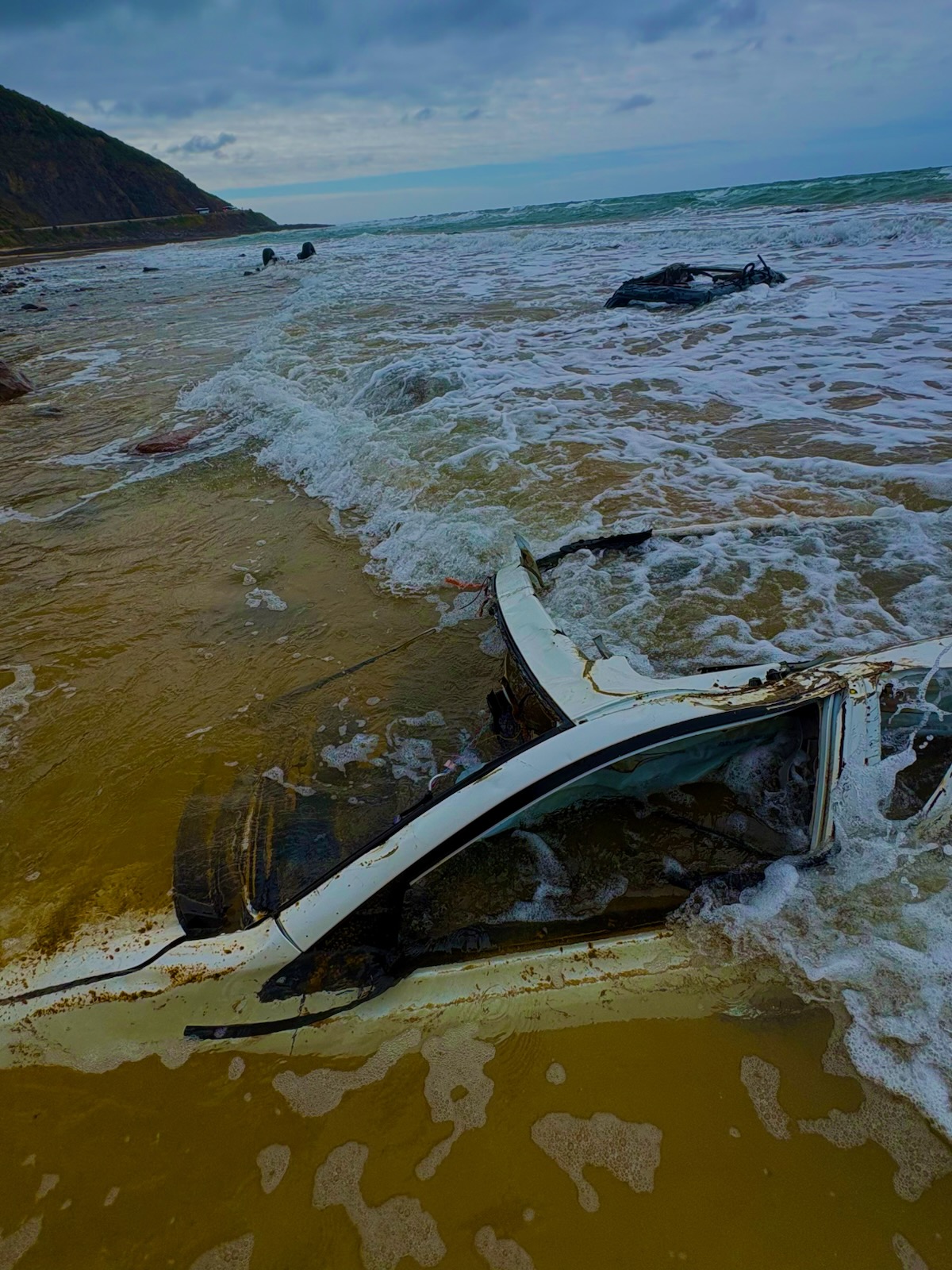
Community environmental activists had to take action to push the Great Ocean Road Coast and Parks Authority (GORCAPA) to remove four cars and two camping trailers which washed away from the Cumberland River caravan park during the flash flooding on the 15 January 2026. Although 12 cars were removed with a Black Hawk heavy-lift helicopter on the 22 January 2026, within weeks local environmental volunteers realised another seven wrecked vehicles remained in the surf below low tide at the mouth of the Cumberland River.
These wrecks were a serious on-going safety hazard to beach and surf users. The wrecks’ engine oils and other chemicals were also an ongoing serious pollution threat within the migration path of Cumberland River native fish species. When concerned residents from Lorne first informed GORCAPA of these additional wrecks in mid-February 2026, GORCAPA as the “responsible authority” initially indicated it was considering leaving the wrecks in the sea, and that it was too hard to remove the wrecks. It was only after lobbying from various community groups and activists, including the Otway Ranges Environment Network (OREN), GORCAPA finally acted. On March 13, four cars and two complete camping trailers were removed. One car remains buried in sand located in the surf at the Cumberland River – it also needs to be removed along with car wrecks still in the sea at Wye River.
How the vehicles were wrecked
A massive rainfall event occurred around the Mt Cowley section of the Great Otway National Park in the morning of Thursday 15 January 2026. Approximately 180mm of rain fell in just a few hours on the southern side of the Otway Ranges. This caused major flash flooding to several rivers that flow into the Southern Ocean. By the afternoon, several caravan parks along the Great Ocean Road were being severely impacted by flash flooding: Wye River, Cumberland River and Erskin River at Lorne. Dramatic news footage showed whole caravan camping parks being hit by a sudden ‘tsunami’ that carried away cars, caravans and camping trailers.
This was a traumatic event for those fleeing and watching their personal possessions being swept away. Tents, and dozens of cars, caravans and camping trailers were washed down the river. Although hundreds of people were displaced, and an injured child was flown to hospital, fortunately no-one was killed. If the flash flooding had occurred at night time, it’s likely people could have died. For example, a horrific night time flash flooding tragedy occurred recently in July 2025 at the Camp Mystic holiday camp on the Guadalupe River in Texas USA, killing well over a hundred people including many children.
Initial car wreck removal
The power of the Otway flash floods resulted in almost 30 cars, caravans and camping trailers being washed away, with many dumped by the waves at the mouth of the Cumberland and Wye Rivers. The responsibility to remove this environmental pollution sits with the Great Ocean Road Coast and Parks Authority (GORCAPA) who manage public land along the Great Ocean Road, including the caravan parks impacted by the flash flooding. On Thursday 22 Jan 2026, CORCAPA organised a marine salvage crew and a ‘Black Hawk’ heavy lift helicopter – it took about three hours at the mouth of the Cumberland River to airlift 12 car wrecks out of the sea. Two wrecks at Wye River were also removed.
Incorrect reports all wrecks removed
GORCAPA held several meetings with other government authorities and informed them and the media that the clean-up at the Cumberland River was complete, with 12 cars having been removed. It also advised that there was no ongoing risk to swimmers or surfers and that there were no ongoing environmental pollution issues. For example, The Age reported (see pdf) on comments made by “VicSES operations manager Chris Longmore” who implied everything that was swept into the sea on the 15 January 2026 had been removed:
“There were about a dozen vehicles at Cumberland River and two at Wye River. Longmore said the crew removed all the vehicles except for one caravan that remained stuck at Cumberland River.”
Similarly, SES chief officer Alistair Drayton stated on an ABC radio breakfast show that the relevant authority (presumably GORCAPA) had informed the SES that there were only 12 cars to remove from the Cumberland River. When specifically ask by ABC journalists if any ongoing safety risks existed for beach users, Mr Drayton did not acknowledge that there were still seven wrecks nearby where people might swim or surf but implied that it was now safe to use the Cumberland River beach, and that the Great Ocean Road was “open for business”:
“ …. it is going to be a hot weekend, once the cars are out of the beach zone will it be safe for swimmers?
Yeah look at the public meeting last night the local authorities down there said that there might be some very minor beach closures in certain areas but the bottom line, the message from me on behalf of the area down there, is that The Great Ocean Road is open for business and I would encourage people to go down there in those areas but just look on the websites, look at Parks Victoria in relation to open parks ….“
However, this advice from the emergency services and GORCAPA was not correct, there were still five cars and two camper trailers in the surf, on the rocks and in rock pools. It is strange that the authorities were not aware of these extra missing cars which were visible at very low tide. Surely the owners of these vehicles must have notified the authorities that their cars and campers had been swept away in the flood? It took community action to locate the remaining car wrecks and force GORCAPA to remove them.
Removing remaining wrecks requires
grassroot community action
In mid-February Lorne residents became aware that there were still car wrecks at the Cumberland River mouth; these were hard to see even at low tide as they were partially buried in the sand, on rocks and in deep rock pools.
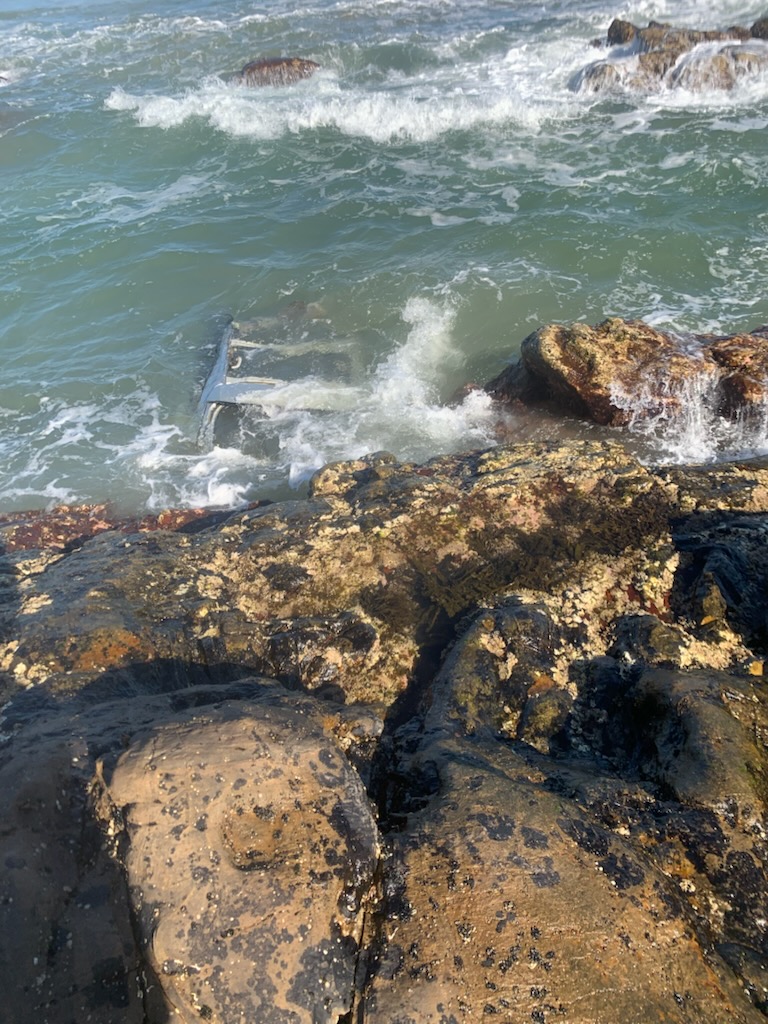
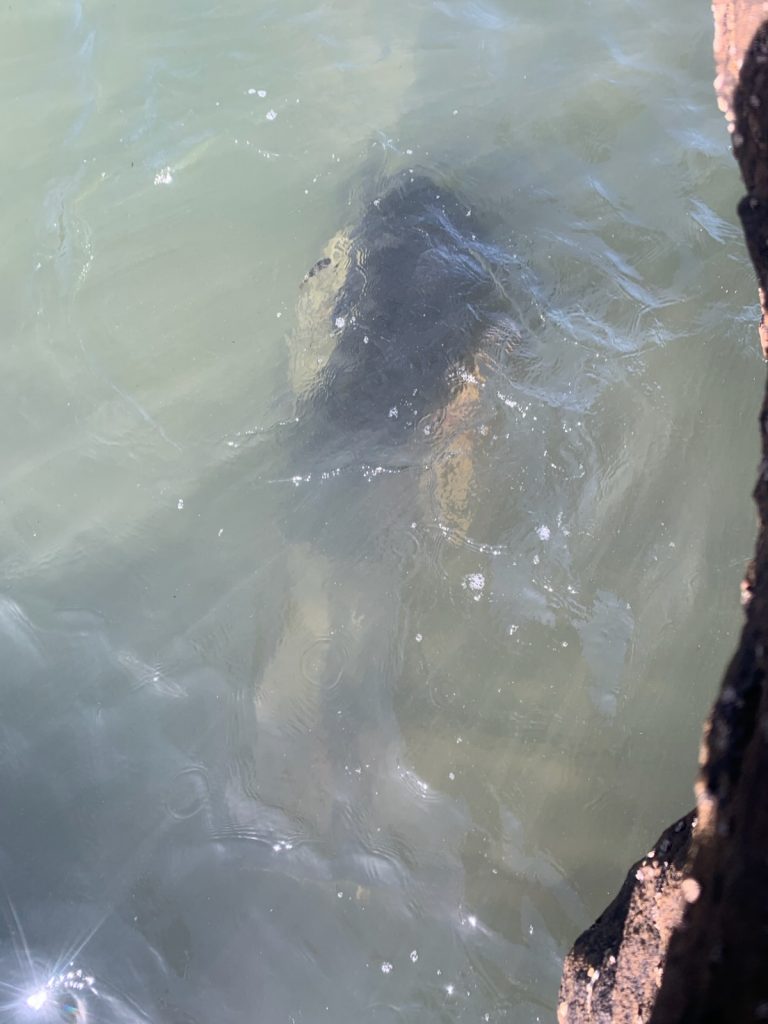
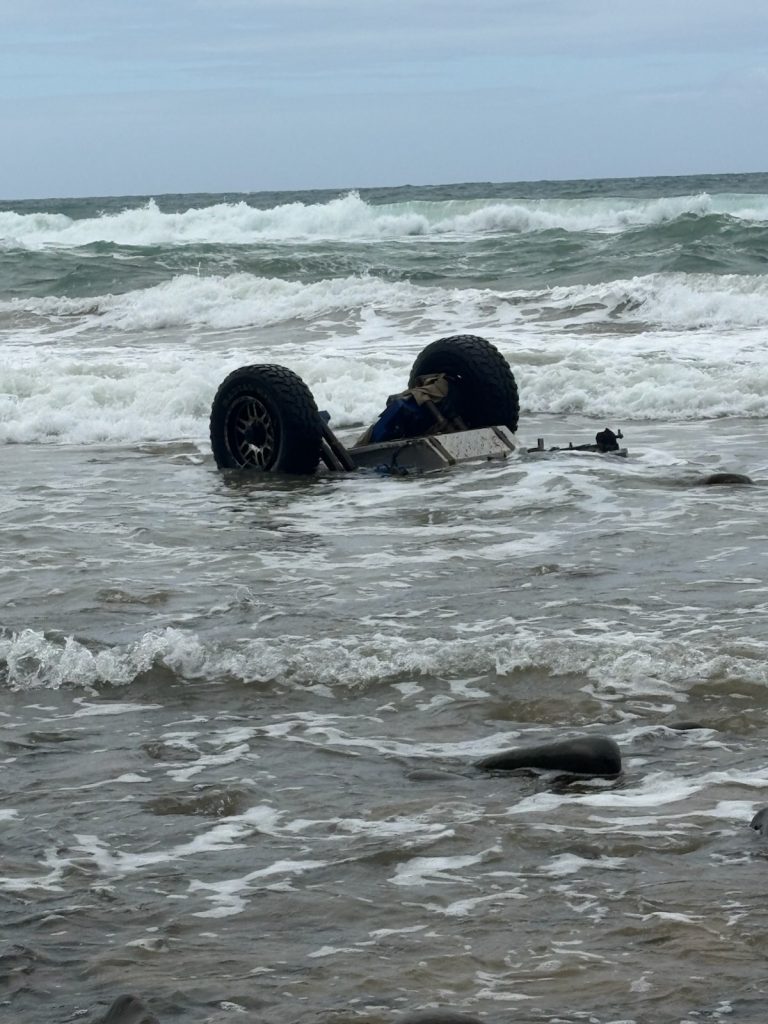
These wrecks were obviously an ongoing safety hazard and were causing environmental pollution. Initial enquiries to the Surf Coast Shire revealed that it was a GORCAPA responsibility and that GORCAPA was “monitoring the situation” to “assess options” and that one option was to leave the cars where they were. It was at this point OREN was approached by members of the community to help persuade GORCAPA to remove the vehicles.
A very low tide in calm conditions, at around noon on Wednesday 25 February, exposed many wrecks so they could be photographed.
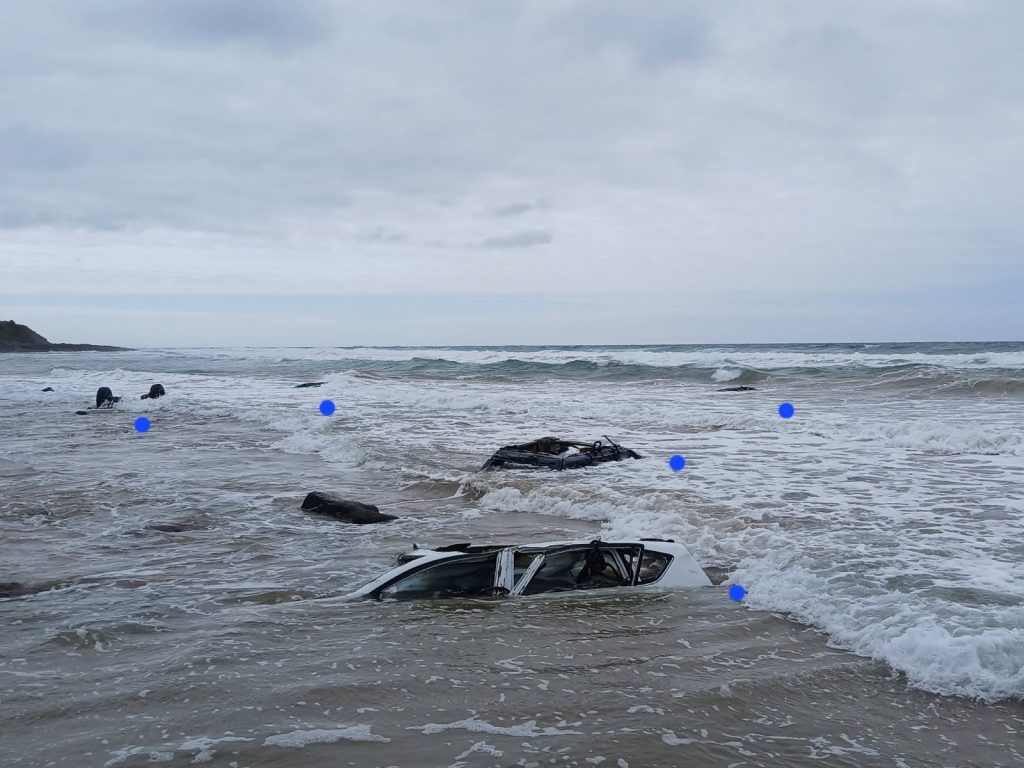
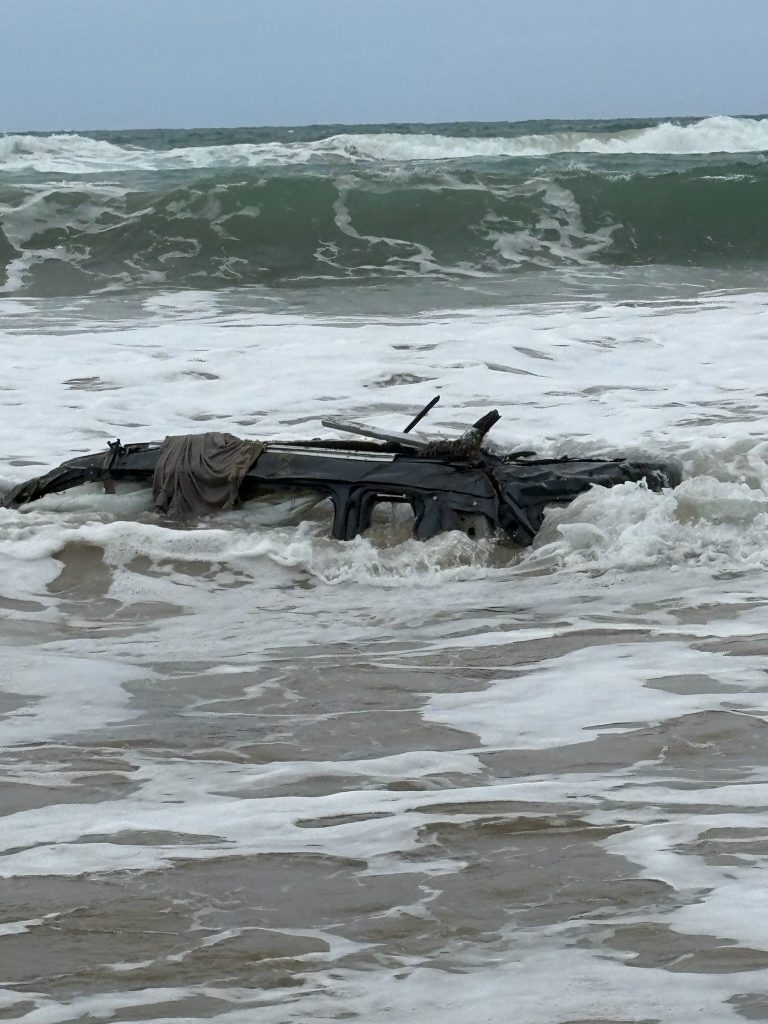
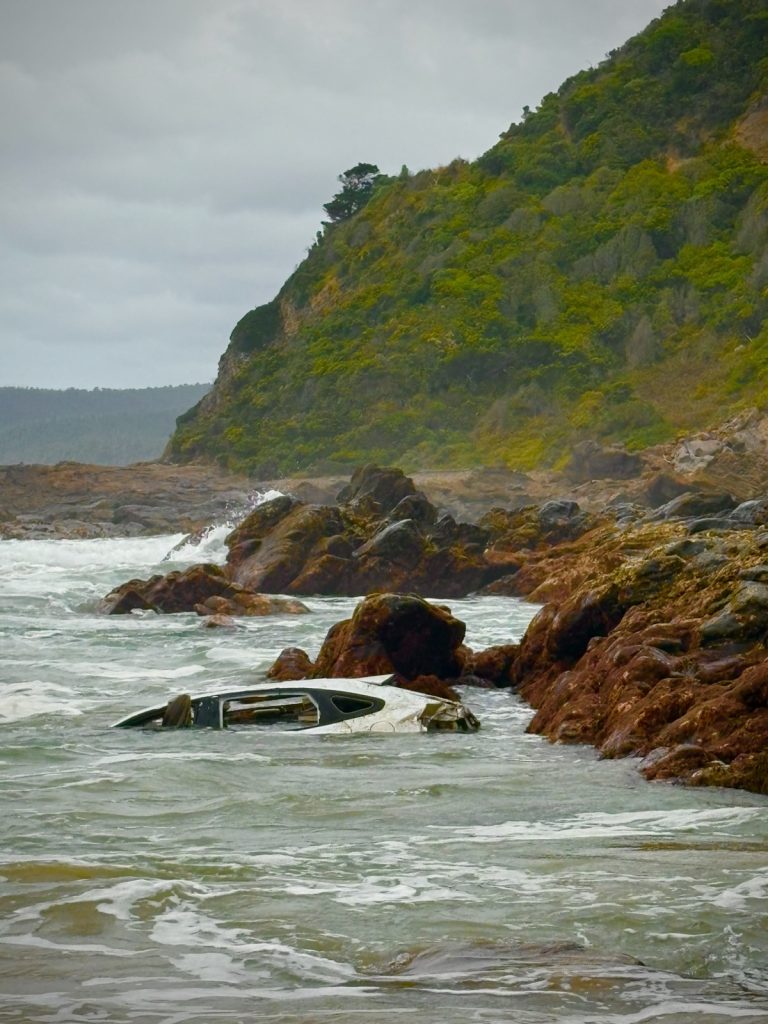
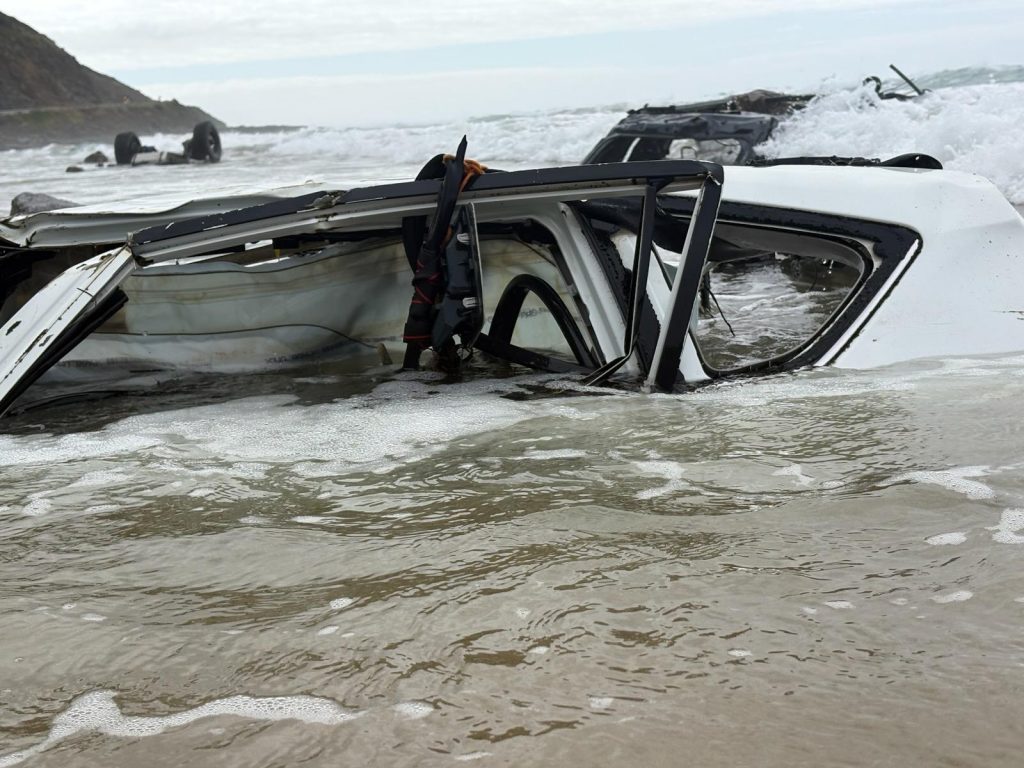
These photos were distributed between members of the community using social media along with criticisms of GORCAPA. Local traditional media also played a very important role informing the community; an article in the Geelong Advertiser had the headline ‘Flood-wrecked cars could remain indefinitely’.
In a later article in the Surf Coast Times (27 February), GORCAPA acknowledged it was considering leaving the car wrecks arguing that they did not pose a serious environmental risk.
Cumberland River native fish
– threatened by car wreck pollution
On 26 February, OREN sent a letter to GORCAPA insisting that all the cars must be removed based on the following points:
- Pristine river – high conservation value native fish
Cumberland River is one of only a few rivers on the Southern Australian continental coastline that is in almost pristine condition. There is no urban or agricultural development within any of its catchments, from the headwaters to the point where the river enters the ocean, except for the caravan park. The river’s catchment is within the Great Otway National Park.
Many of the rivers in the Otway ranges are high priority conservation areas for native fish. These coastal rivers, such as the Cumberland River, contain various native fish species, including the Broad-finned galaxias, with lifecycles that require both freshwater and seawater habitats. As noted by Koehn and Connor (1990, p35 see pdf).
“Because the fish fauna of the Otway coastal streams consists of species which need to migrate between the sea and fresh water at some stage of their lifecycles, the maintenance of fish passage in these streams is important”.
Given the cars wrecks were within the migration path of Cumberland River native fish species, these cars were a serious pollution threat. The fish that live in the Great Otway National Park need to migrate to the ocean through an area now threatened by environmental pollution. Leaving the cars wrecks would likely be a breach of the Flora and Fauna Guarantee Act (1988) given the Australian Grayling endangered native fish lives in the Cumberland River and is listed in this Act. - Tourism industry – reputational damage
The cars wrecks were a serious pollution threat – generated by the Great Ocean Road tourist industry – in the migration path of Cumberland River native fish species. If these cars wrecks remained, there would be ongoing reputational damage to any claim that the Great Ocean Road tourist industry is environmentally sustainable.
GORCAPA replied to OREN the next day, claiming they were yet to decide what to do, that they had put up warning signs notify the public that car wrecks where there (which they had not) and insisted that the pollution threat was minimal but provided no evidence of the claim:
Letter From GORCAPA to OREN (Friday 27 February 2026)
We understand the local interest in this matter. We have been providing updates to the community through local flood recovery newsletters and at in-person meetings in Wye River since the flood event.
Thank you for your comments and we note OREN’s history.
GORCAPA is working through the feasibility of identifying and removing remaining vehicles at Wye River and Cumberland River, while also completing an assessment of the risk to the environment and public safety of leaving them in place if it is not feasible, noting there are very complex access challenges and considerations at Cumberland River for heavy machinery that would be required. This area is subject to the National Parks Act 1975 and has known significant cultural heritage sites.
To confirm, no decisions have been made at this point, and we are working through all the feasible options.
Signage is installed to alert beach users of the potential risks of submerged objects in the area.
GORCAPA has also been consulting with EPA Victoria. Any fuel or oil has likely already washed away during or soon after the flood incident and, being within a large water body, the ongoing contamination risk is low.
We will let the community know as soon as a decision is made about next steps, but we are also very happy to discuss this matter with you.
Regards,
Great Ocean Road Coast and Parks Authority
Shell midden
– Aboriginal cultural heritage site
GORCAPA’s acknowledgement of cultural heritage sites related to an Aboriginal shell midden on the beach at the mouth of the Cumberland River. GORCAPA was concerned that heavy machinery needed to remove remaining car wrecks might damage the middens. However, Gadubanud Traditional Owners had informed OREN that heavy machinery could access the beach without damaging the midden and confirmed that GORCAPA had not consulted with them. The Eastern Maar Aboriginal Corporation had also advised GORCAPA that their representatives had recently driven vehicles onto the beach to put in sandbags to protect the midden from further erosion and that heavy machinery could be utilised to remove wrecks without impacting this important cultural site.
Wye River Separation Creek
Community Association
A day after OREN received GORCAPA’s letter the Wye River Separation Creek Community Association Inc, held its annual general meeting at the Wye River Surf Life Saving Club. After a Gadubanud Traditional Owner did a Welcome to Country, various government authorities were in attendance, including GORCAPA, the Corangamite Catchment Management Authority (CCMA) and Environmental Protection Authority (EPA); with their spokespeople on the agenda to present at the meeting.
OREN was also formally on the agenda to inform the 60 Great Ocean Road residents present that there were still numerous wrecked vehicles in the sea creating an ongoing pollution issue for native fish and safety hazard for people using the beach.
The GORCAPA, CCMA and EPA were each forced to publicly address concerns about GORCAPA’s option of leaving the wrecks in the sea. OREN made it clear, with support from hecklers in the audience, that all the wrecks must be removed from both the Cumberland River and near Wye River. It was only after this united community pressure that a GORCAPA representative indicated that the wrecks could be removed claiming that this may take some time.
Four cars and two camper trailers removed
After this community action directed at GORCAPA, it did not take long for the marine salvage contractors to be back on the Cumberland River beach with an excavator to remove most of the wrecks. During calm weather on 10 March 2026, the marine salvage contractors assessed the situation with a drone. Coincidentally, a local Lorne environmentalist surfer was at the beach. He helped by attaching a buoy to each of the wrecks to mark their location. One of the cars in deeper water had a damaged roof sticking up like a Stanley knife ready to slice any swimmer or any surfer who came off their surfboard. (There were still no warnings signs about the risk of car wrecks in the water.)
Early the next day, the marine salvage contractors took advantage of the calm weather and very low tide. Using an excavator like a massive fishing rod, a long cable heaved the snared wrecks off the rocks and sand.
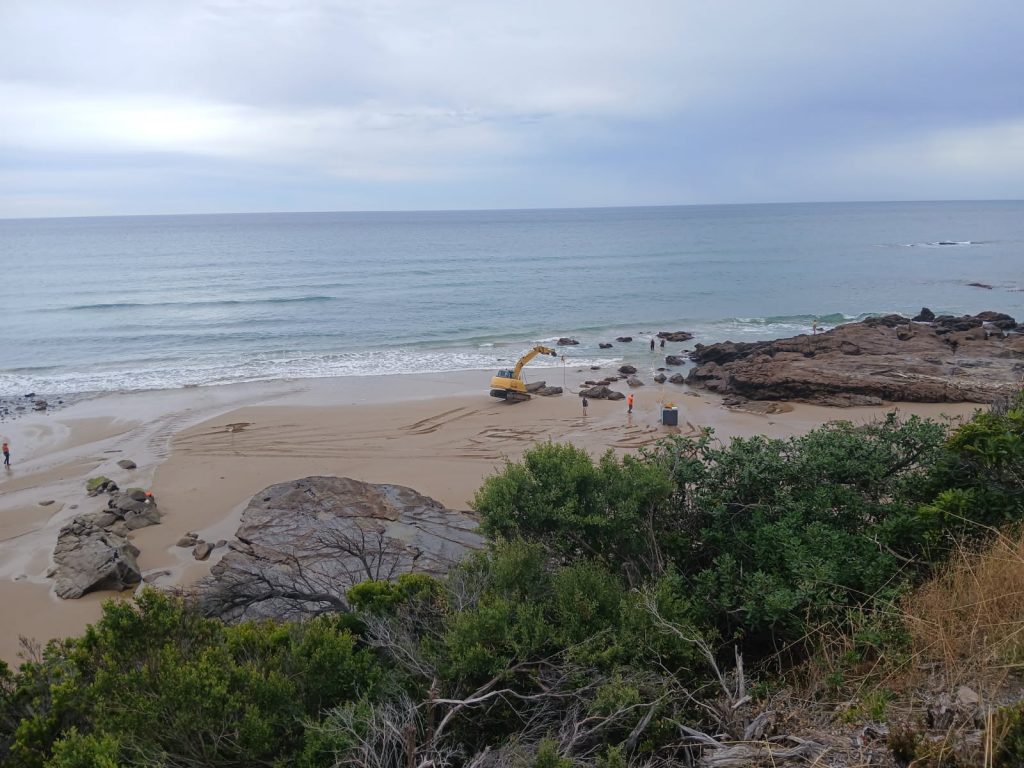
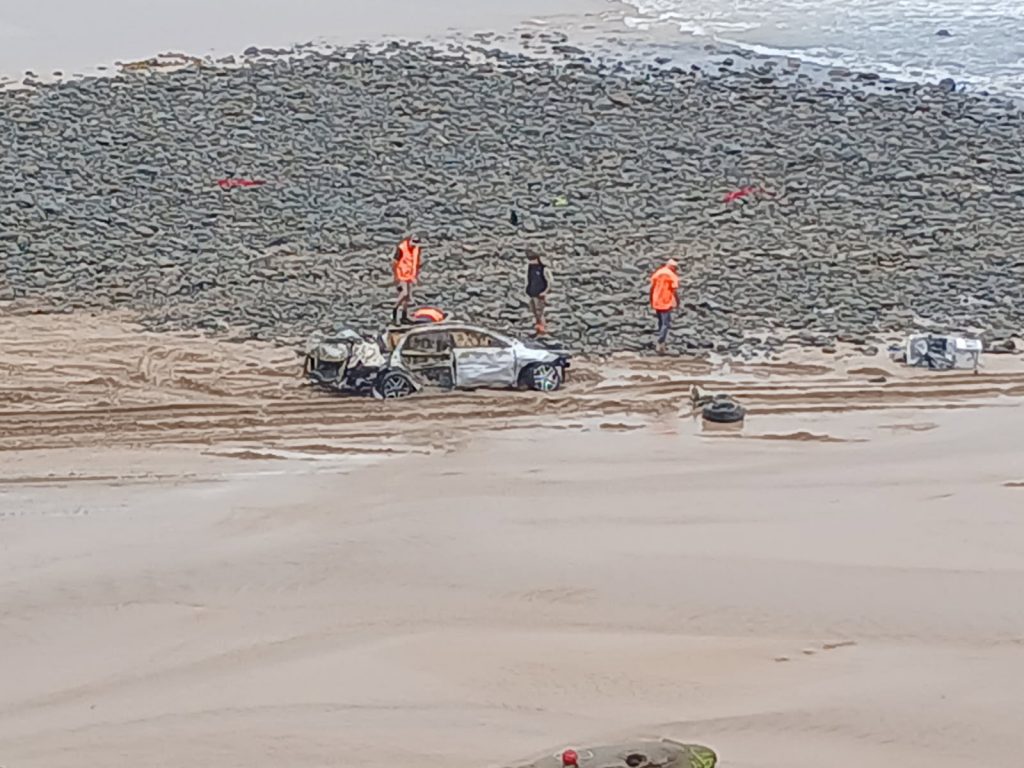
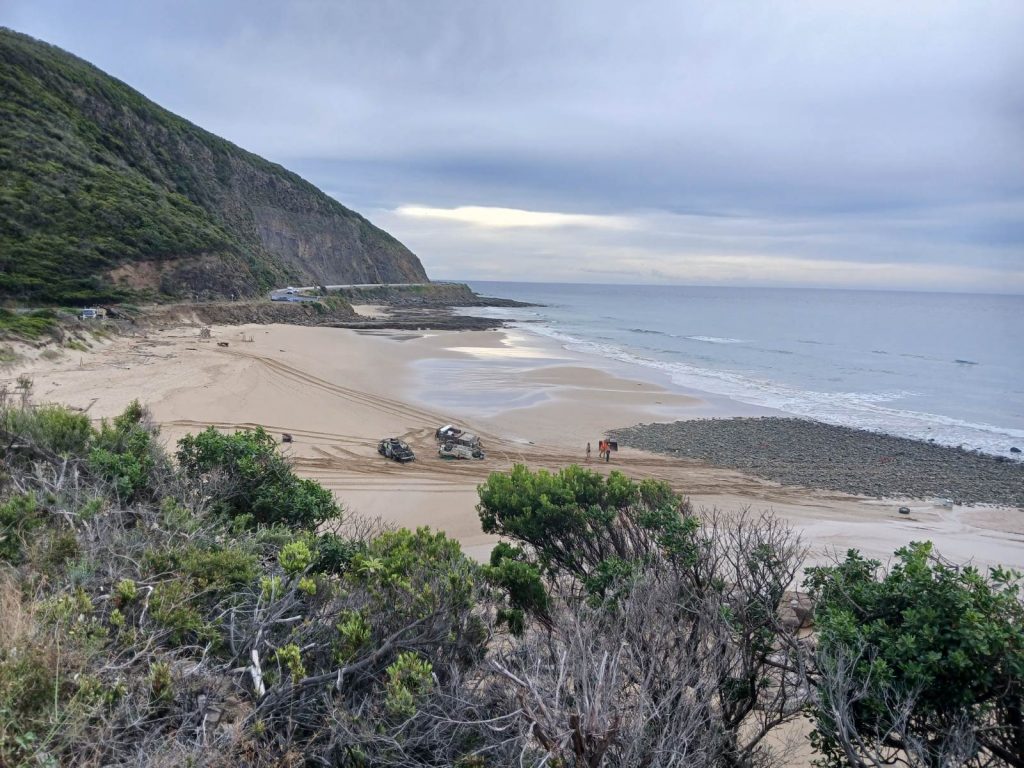
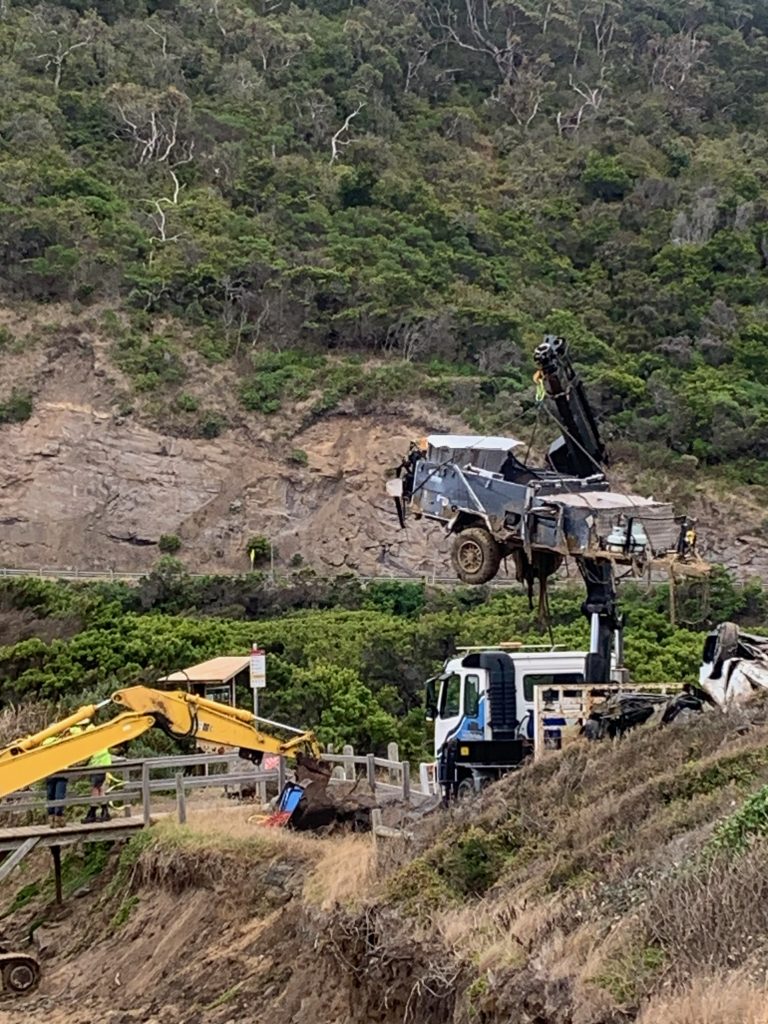
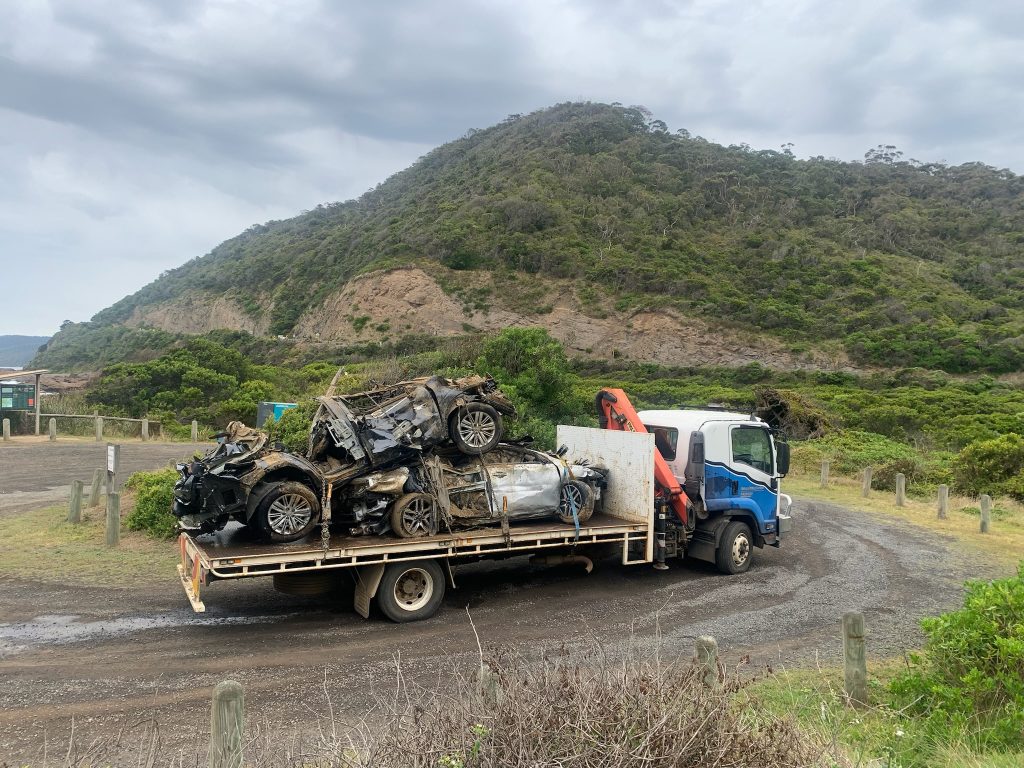
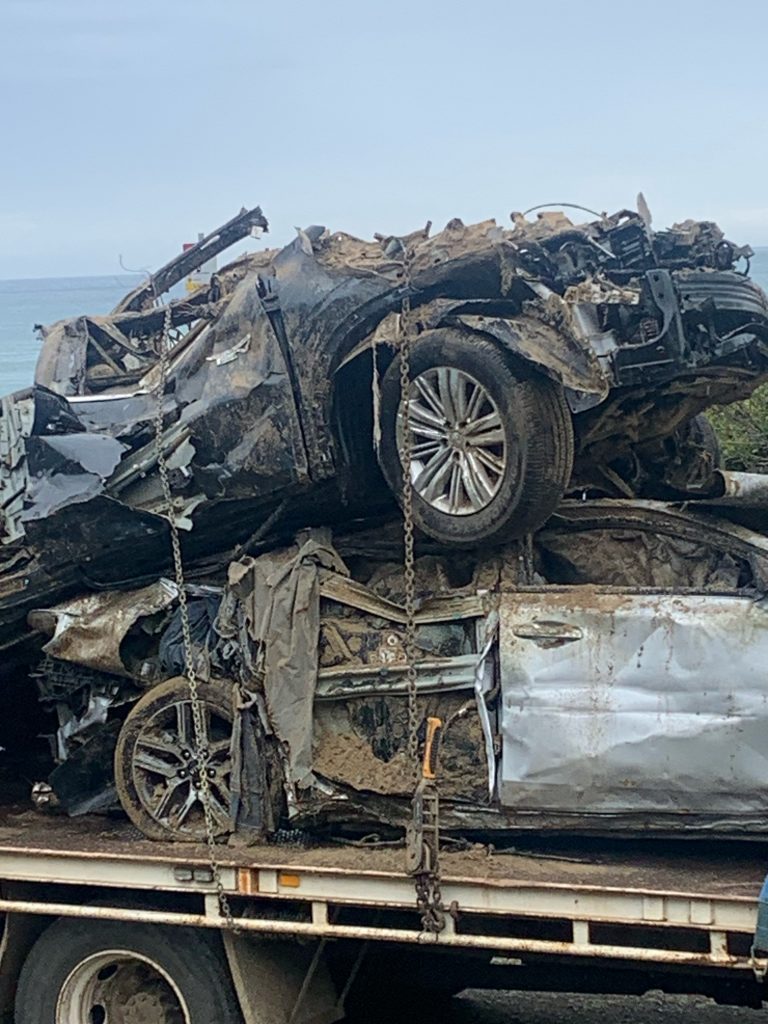
Other equipment was used to flush sand away from stuck cars. That morning four cars and two campers were removed from the sea and then removed from the beach using the excavator as shown below. Although attempts were made, one remaining car buried deeper in sand could not be dislodged. The marine salvage contractors did a great job. See Surf Coast Times (13 March 2026).
Conclusion
Although it was ultimately great to see the removal of these wrecks, it remains to be seen if the remaining car wrecks at Wye River and Cumberland River will also be removed. It was disappointing GORCAPA had considered leaving the wrecks in place. It took grassroot community action to remind GORCAPA that they have a special responsibility to look after the high conservation rivers of the Otways. GORCAPA must ensure the tourism industry infrastructure along the Great Ocean Road that they manage does not contribute to environmental degradation – the community and OREN will continue to monitor the situation.